What makes Buffalo’s sports culture different from anywhere else?
Josh Allen is as Buffalo as you can get without being from here. That resilient, never-say-die attitude. It’s an open, generous community. You say hello to everyone, because if you’re going to survive a four-foot snowstorm, you’d better be nice to the people next to you. You wear your Bills or Sabres gear 365 days a year, to work, church, weddings. Our teams are a celebration of our community. We’re the butt of so many jokes, but we know what we’ve got here.
What’s a moment in Buffalo sports you’ll never forget?
January 1992, the rally after the Super Bowl. The crowd started chanting “We want Scotty,” and everyone was in tears, including Scott Norwood. It came up from the crowd, completely organic. I was never more proud of my city.
How did you end up working in and teaching sports law?
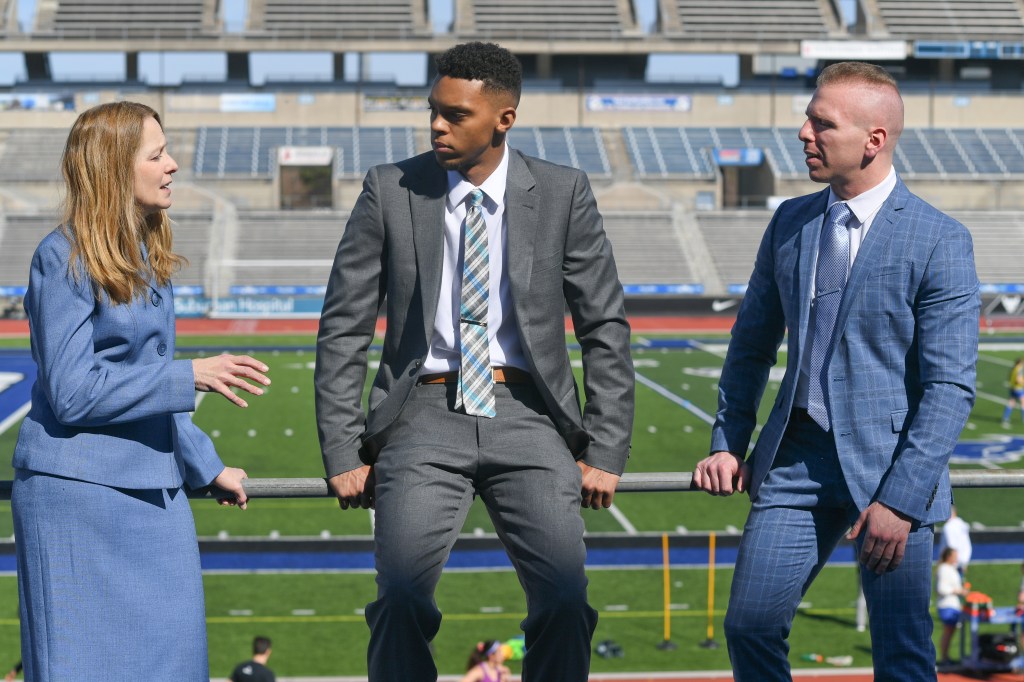
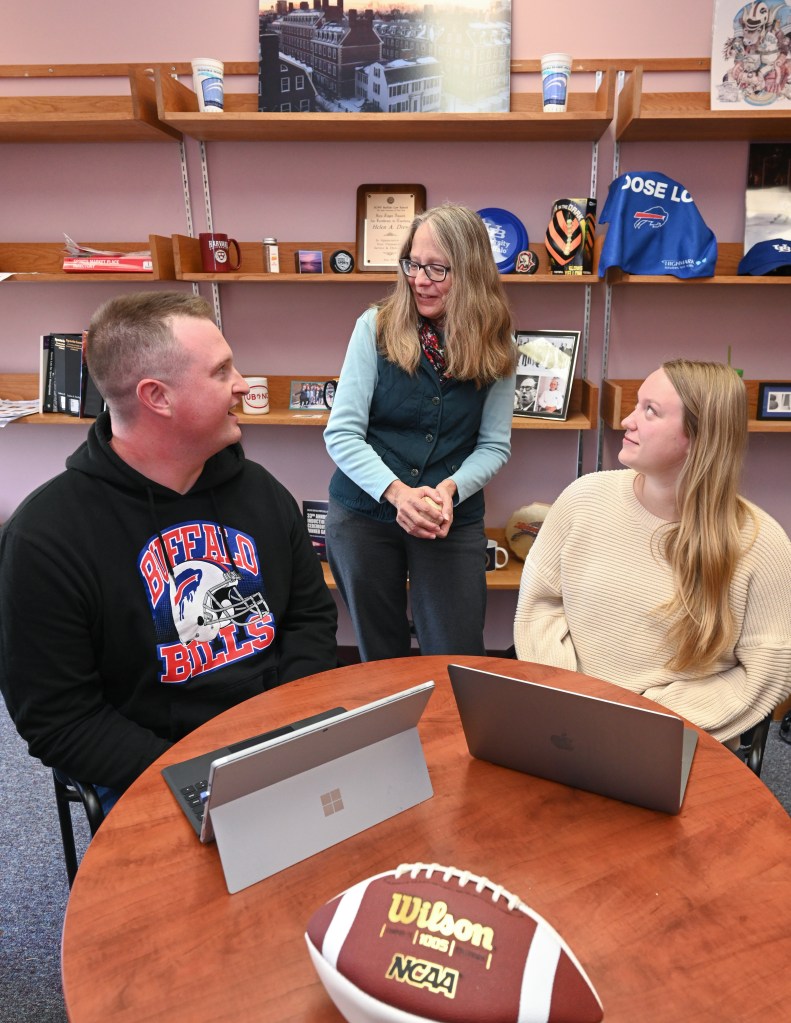
I played hockey when very few women did, and I loved law. My Harvard thesis advisor, Watergate prosecutor special Archibald Cox, told me if I wanted to be the Sabres’ attorney, I needed to go back to Buffalo. So I did. I worked NHL expansion deals and Alexander Mogilny’s defection, then went in-house with the Sabres. Today I lead UB’s Center for the Advancement of Sport.
What does a pro soccer club need to do to earn its place in Buffalo’s sports culture?
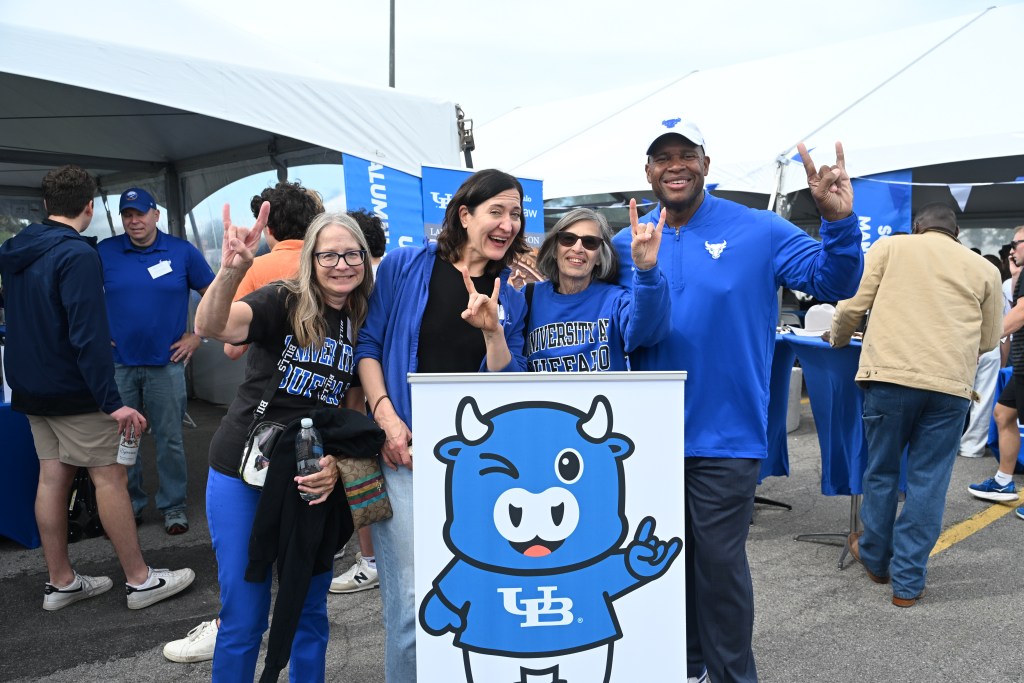
You already have a leg up. Soccer is one of the most played youth sports in Western New York, and kids who play grow up to be fans. Three things matter: a family-friendly price point, real connections with local clubs and the community, and a great mascot. Personality is huge.
What do most fans not realize goes into launching a team?
It’s a lot. From the legal side, it’s everything from the expansion documents to the facility agreement: are you owning or renting, and from whom? In my class we run a virtual NFL expansion, and students are always amazed. Traffic plans, security, key hires, contracts, licensing, trademarks, sponsorship. Then once you have it, you have to push it out. San Jose’s Sharks in the Parks initiative is my favorite example of winning over a non-traditional market.
What makes a stadium project good for a community, not just a team?
It depends on where it’s placed. The design has to fit the location and the community’s interests, and it has to create new value, not just divert it. The question is always whether you’re drawing new business or just moving it from somewhere else.
How has Title IX changed the game for women and girls?
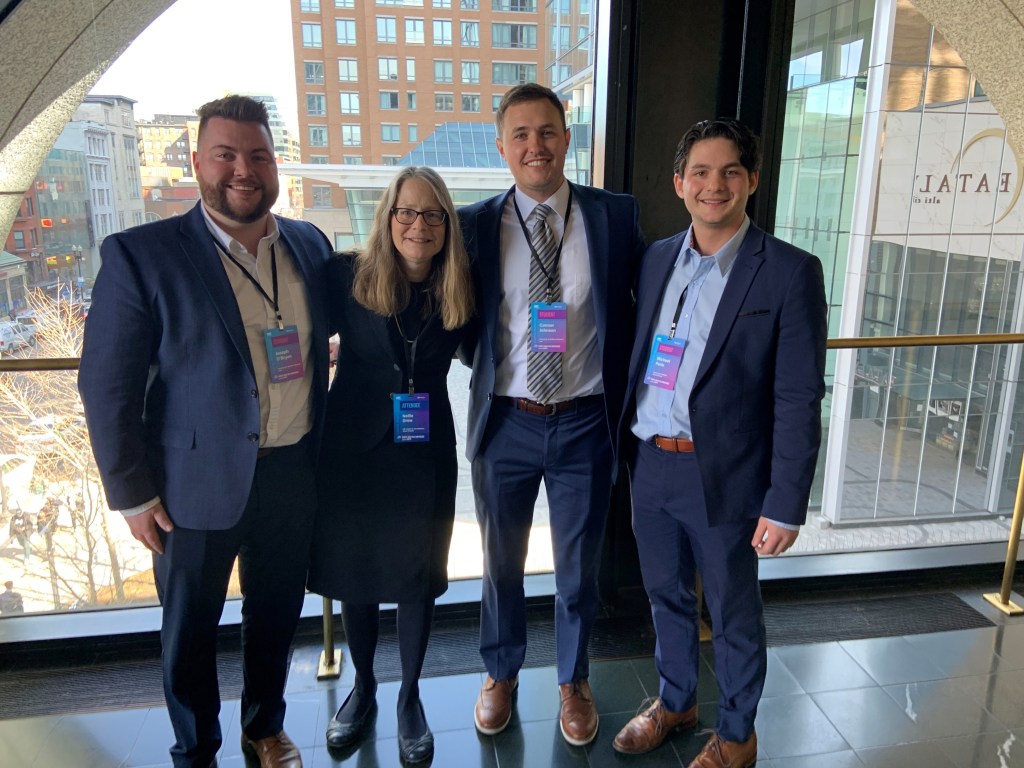
I have a love-hate relationship with it. There are far more opportunities for girls and women than before 1972, and I’ve lived that. But it’s become a political football, and it isn’t always an effective tool. Getting girls’ varsity ice hockey approved in Western New York took four years. Girls’ golf sailed through without a vote. Those young women had been raised to believe there were no limits, and that was the first time many of them learned otherwise.
What’s one change you’d make tomorrow to better protect youth athletes?
After Damar Hamlin’s collapse, our clinic drafted a proposal to give sports venues incentives to create safer environments: an AED, EpiPens on site and an emergency action plan everyone has actually rehearsed. Damar is with us today because those people had a plan and executed it flawlessly. We also want common-sense standards on weather. Sometimes the right call is to reschedule.
What are you most excited to see when Buffalo Pro Soccer kicks off?
It’s going to be so much fun. All those kids who’ve dribbled a soccer ball, coming together around that very special moment when it’s finally here. It’s a universal, low-barrier to entry game. You don’t need $600 worth of pads to play, and that matters to me.